
Website AEO and GEO Checker is becoming an important toolset for modern SEO professionals who want to improve how web pages perform in search engines and AI-driven discovery systems.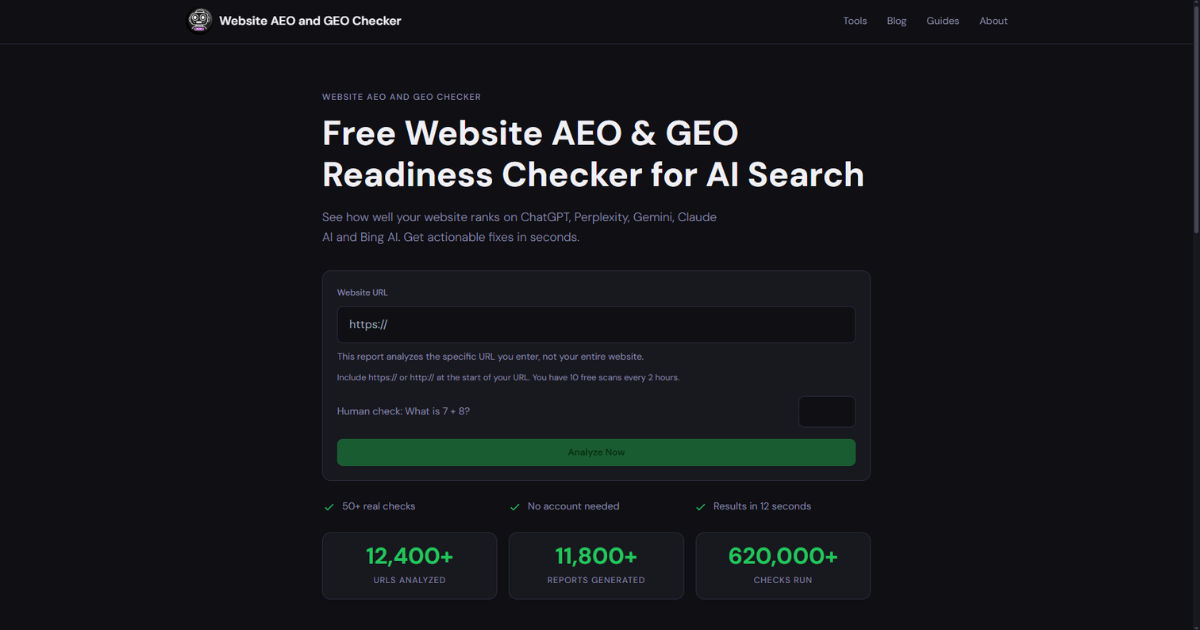
In this guide, we will explore what a Website AEO and GEO Checker website GEO checklist for pages means, why it matters, and how you can use it effectively to improve visibility, rankings, and user engagement. This article is written in a simple, student-friendly way so even a 12th-grade reader can understand advanced SEO and GEO concepts without confusion.
Website GEO Checklist for Pages
What Does GEO Mean in Website Optimization?
GEO in website optimization usually refers to Geographic Optimization. It is the process of improving web pages so they perform better for users in specific locations or regions. This is especially important for local businesses, service providers, and content that depends on location-based searches.
A website GEO checklist for pages is a structured set of steps that ensures your webpage is properly optimized for geographic relevance. It helps search engines understand where your content should be shown and to whom.
When combined with modern SEO techniques and tools like Website AEO and GEO Checker, GEO optimization becomes even more powerful because it aligns content with both search intent and location relevance.
Why GEO Optimization Matters for Web Pages
Search engines like Google try to show users the most relevant results based on location. For example, someone searching for “best bakery near me” in one city will see different results than someone in another city.
This is where GEO optimization plays a major role:
- It improves local search rankings
- It increases visibility in targeted regions
- It drives more relevant traffic
- It helps businesses reach nearby customers
A proper GEO checklist ensures that no important optimization step is missed.
Core Components of a Website GEO Checklist for Pages
Keyword and Location Targeting
One of the first steps in any GEO checklist is combining keywords with location signals. This means your content should naturally include:
- City names
- Region or country references
- Local service keywords
For example, instead of writing “best dentist,” you might write “best dentist in Lahore.”
A Website AEO and GEO Checker can help identify whether your keywords are properly localized and optimized.
Optimizing Title Tags and Meta Descriptions
Title tags and meta descriptions are very important for GEO SEO. They tell search engines what your page is about and where it is relevant.
A good GEO-optimized title might look like:
“Affordable Home Cleaning Services in Karachi – Trusted Local Experts”
This helps search engines connect your page with location-based queries.
URL Structure Optimization
Clean and structured URLs improve GEO clarity. For example:
Good URL:
/karachi-home-cleaning-services
Bad URL:
/servicepage123?id=45
A Website AEO and GEO Checker can evaluate whether your URLs are GEO-friendly and readable.
Content Localization
Content localization is about making your page feel relevant to a specific audience. This includes:
- Using local language or slang when appropriate
- Mentioning local landmarks
- Referring to regional needs or problems
This helps users feel more connected to your content and improves engagement.
On-Page GEO Optimization Checklist
Header Tag Optimization
Your headings (H1, H2, H3) should include location-based keywords naturally. This helps search engines understand content structure and relevance.
Example:
- Best Plumbing Services in Dubai
- Affordable Plumbing Solutions in Dubai Marina
A Website AEO and GEO Checker can scan your headers to ensure proper GEO alignment.
Internal Linking Strategy
Internal links help distribute GEO relevance across your website. For example:
- Linking “Karachi Plumbing Services” page to “Home Repair Tips in Karachi”
This strengthens your website’s local SEO structure.
Image GEO Optimization
Images should also support GEO signals. You can optimize images by:
- Using location-based file names
- Adding alt text with geographic keywords
- Compressing images for faster loading
Example alt text:
“Electrician repairing wiring in Lahore home”
Mobile Optimization for GEO Search
Most GEO searches happen on mobile devices. Therefore:
- Pages must load quickly
- Layout must be mobile-friendly
- Buttons should be easy to tap
A Website AEO and GEO Checker can test mobile performance and GEO compatibility.
Technical GEO SEO Checklist
Schema Markup for Local SEO
Schema markup is structured data that helps search engines understand your business details.
Important schema types include:
- Local Business Schema
- Address Schema
- Service Area Schema
This improves your chances of appearing in local search results and map listings.
Page Speed Optimization
Fast websites rank better in GEO search results. Slow websites lose users quickly.
You should:
- Compress images
- Use caching
- Minimize scripts
A Website AEO and GEO Checker often includes speed analysis features to highlight performance issues.
Geo-Targeted Sitemap
A sitemap helps search engines crawl your website. For GEO optimization:
- Include location-specific pages
- Organize URLs by region
- Keep structure clean and updated
Advanced GEO Optimization Strategies
User Intent and Location Matching
Understanding user intent is essential for GEO success. Users often search with different intentions:
- Informational (What is plumbing?)
- Navigational (Find plumber near me)
- Transactional (Hire plumber in Karachi)
Your content must match these intents while staying GEO-focused.
Local Backlink Building
Backlinks from local websites improve GEO authority. Examples include:
- Local news sites
- Regional blogs
- Business directories
These links tell search engines your website is trusted in a specific area.
Google Business Profile Integration
For businesses, connecting your website to a Google Business Profile improves GEO visibility significantly.
It helps with:
- Map rankings
- Local search results
- Customer reviews
A Website AEO and GEO Checker can help verify consistency between your website and business listings.
Common GEO Checklist Mistakes to Avoid
Overstuffing Location Keywords
Using too many city names can make content unnatural. Instead, use location keywords naturally within sentences.
Ignoring Mobile Users
If your website is not mobile-friendly, GEO performance will drop significantly.
Poor Content Quality
Even with strong GEO signals, low-quality content will not rank well.
Missing Schema Markup
Without structured data, search engines may not fully understand your location relevance.
How Website AEO and GEO Checker Helps in GEO Optimization
A Website AEO and GEO Checker is a tool designed to analyze both Answer Engine Optimization (AEO) and Geographic Optimization (GEO) factors.
It helps by:
- Checking keyword placement
- Analyzing GEO relevance
- Evaluating content structure
- Testing mobile performance
- Reviewing metadata optimization
By using a Website AEO and GEO Checker, website owners can quickly identify gaps and improve their page performance in both search engines and AI-driven platforms.
Best Practices for a Strong GEO Checklist
Keep Content Updated
Search engines prefer fresh and updated location content.
Use Natural Language
Avoid forced keywords. Write for humans first.
Focus on Local Value
Always think: “Does this help someone in this specific location?”
Combine SEO + GEO + AEO
Modern optimization is not just SEO. You must combine:
- SEO (Search Optimization)
- GEO (Location Optimization)
- AEO (Answer Optimization)
A Website AEO and GEO Checker helps unify all three strategies.
Future of GEO Optimization
The future of GEO SEO is becoming more intelligent. Search engines are now using AI to understand:
- User behavior
- Location patterns
- Search intent
- Real-world context
This means GEO optimization will become more personalized and dynamic.
Websites that adapt early using tools like Website AEO and GEO Checker will have a strong advantage.
Conclusion
A website GEO checklist for pages is essential for improving local visibility, attracting targeted traffic, and ensuring your content reaches the right audience. By focusing on location keywords, technical SEO, mobile optimization, and structured data, you can build a strong GEO foundation for your website.
When combined with modern tools like Website AEO and GEO Checker, GEO optimization becomes more accurate and efficient. It helps website owners identify weaknesses and improve performance across both search engines and AI-driven platforms.
In the future, GEO optimization will continue to evolve with smarter algorithms and user-focused search systems. Websites that follow a strong GEO checklist today will be better prepared for tomorrow’s digital landscape.